
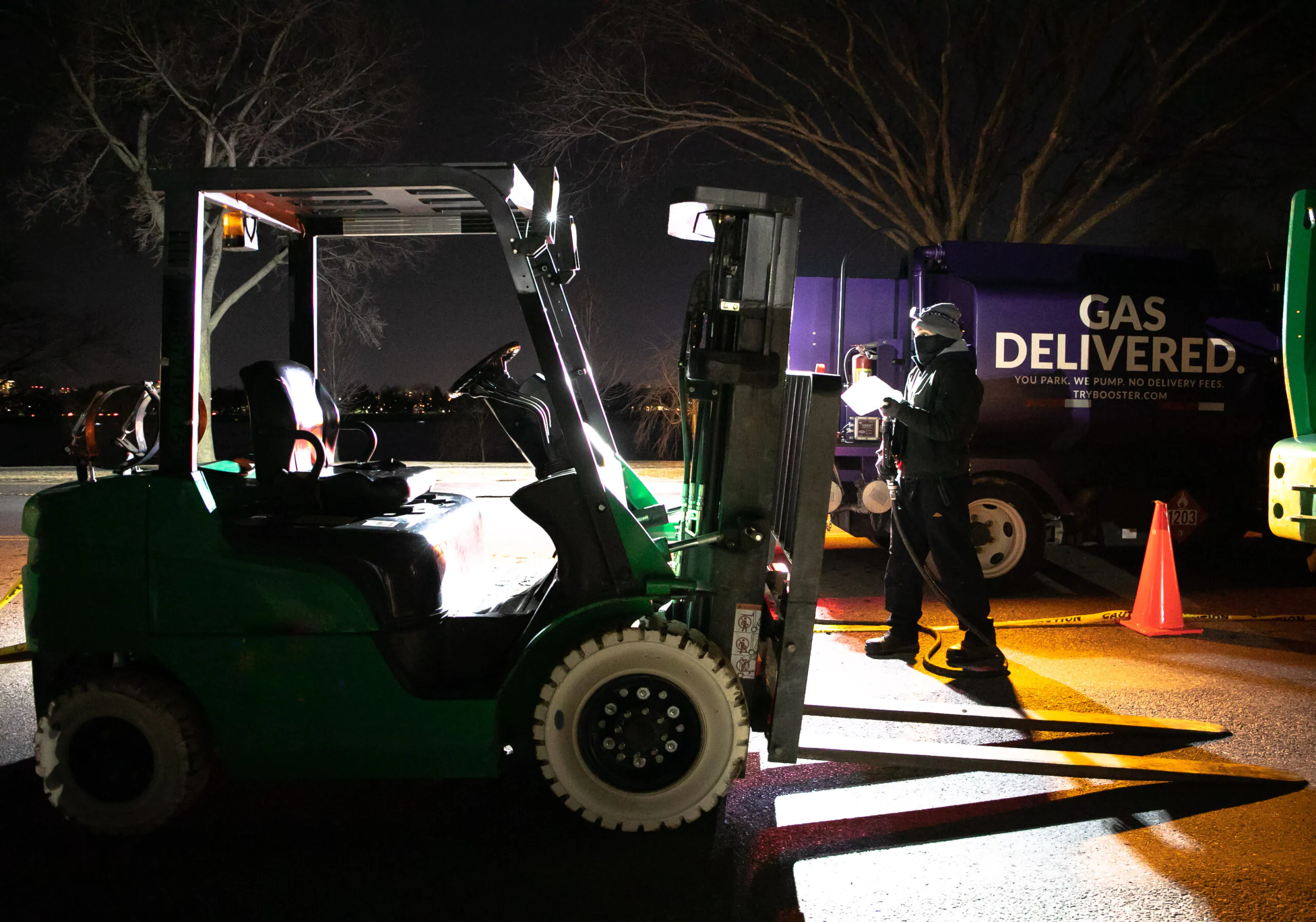
Winter storms can cut power to gas stations and curtail refinery output just as fleets and generators need fuel most, and this year those storms will hit a market with less fuel in reserve to absorb the disruption. The U.S. Energy Information Administration (EIA) expects distillate inventories, which include diesel and heating oil, to run about 11% below the five-year average this quarter, and the International Energy Agency expects tight diesel supply to persist well into 2027. Booster keeps fleets fueled through winter emergencies by securing supply under contract, delivering directly to vehicles and equipment, and fueling backup generators on the same visits.
Why could a winter emergency hit harder this year?
Diesel supply is already stretched heading into this winter. U.S. distillate exports rose 20% in the first seven months of 2026 in the first seven months of 2026 as global production fell. Heating season now draws on the same supply, and EIA forecasts heating oil prices will average 34% higher this winter than last. Its winter outlook also assumes a much colder winter in the West than last year, adding heating demand in the same months fleets face storm risk.
That pressure is already showing up in diesel prices, before any storm arrives. In EIA’s October 26 survey, the Midwest diesel average had climbed 22 cents in two weeks to $6.480 a gallon. The Rocky Mountain region, which includes Idaho, Utah, and Colorado, posted its highest monthly average on record in September, and AAA put Washington at $7.29 and Oregon at $6.74 on October 26.
When a storm hits a market this tight, it can cut supply at the source. During Winter Storm Fern last January, Cenovus Energy curtailed its Lima, Ohio, refinery, taking about 172,000 barrels a day of throughput offline, and Marathon Petroleum idled units at its Galveston Bay refinery in Texas, according to Industrial Info Resources.
How has Booster kept fleets running through past emergencies?
Less than three months before the Border 13 fire near San Diego, Booster agreed to provide CAL FIRE with on-demand mobile fueling during emergencies. When the fire broke out, Booster dedicated a tanker to round-the-clock fueling for 37 hours pumping about 1,000 gallons of clear diesel into roughly 50 vehicles.
After Hurricane Laura cut power, cell service, and working gas stations in Lake Charles, Louisiana, Booster sent a service team to fuel first responders and business generators. During Hurricane Ida, Booster partnered with a national grocery chain to keep the chain’s delivery drivers on their routes while many stations in Baton Rouge and New Orleans were out of fuel.
What does Booster do to keep a fleet fueled this winter?
In each of those emergencies, Booster kept fuel moving while local stations were down. The same model applies to winter planning. The U.S. Department of Energy advises businesses that rely on fuel to confirm their supplier’s contractual arrangements for emergencies and to ask whether that supplier can reach their facility and operate without power. A Booster emergency fuel plan addresses both:
- Contracted supply: Booster sources fuel from multiple suppliers and terminals under supply contracts. Fuel for scheduled customers is committed in advance, and Booster can change sources on short notice if a terminal or supplier is disrupted.
- Delivery that doesn’t depend on a station: Smart Tankers fuel vehicles where they are parked, often overnight. Drivers aren’t left looking for an open station when a storm cuts power to retail sites.
- Generator and equipment fueling: Booster fuels backup generators and off-road equipment on the same visit as vehicles, with on-demand deliveries available when an outage runs long.
- Gasoline, diesel, and renewable diesel in one trip: Smart Tankers carry all three fuels, which keeps mixed fleets on a single delivery.
- Vehicle-level usage data: The customer dashboard tracks gallons for each vehicle, which fleet managers can use to estimate winter demand and set delivery schedules.
If your team wants an emergency fuel plan in place before the first winter storm, contact our team for a review of your emergency fuel needs and learn how Booster can help.