
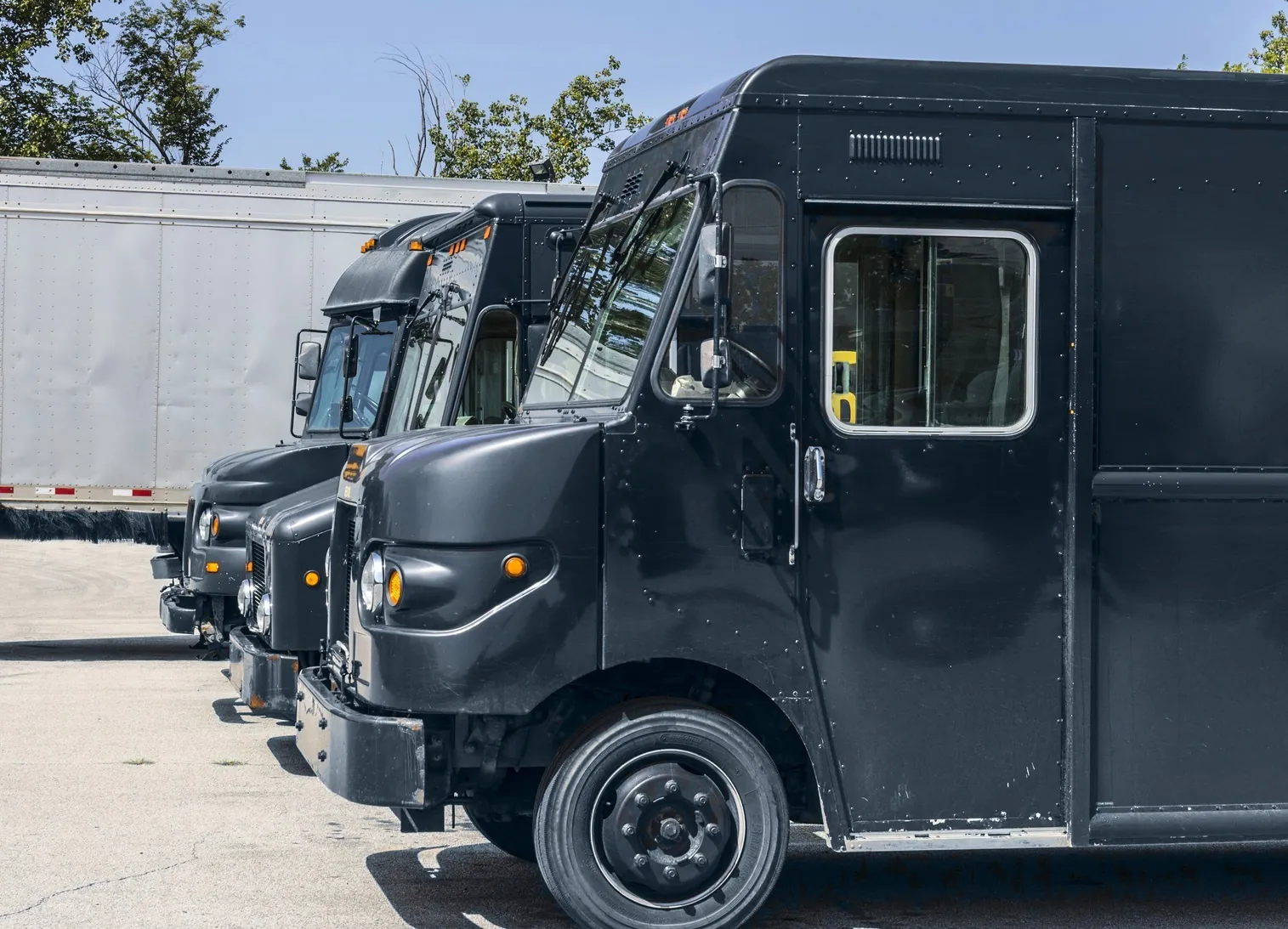
Last-mile delivery fleets keep vans moving through peak season by fueling on site overnight, so every driver starts the shift with a full tank and no route is interrupted by a trip to the pump. For logistics fleets heading into the busiest weeks of the year, the difference shows up in every shift. A van that leaves the yard late or detours mid-route for fuel has less of the day left to deliver its cargo, and every fueling trip takes time back from the route and the driver on it.
Delivery service partners and independent last-mile contractors handle the final step of the holiday rush. They run the vans, hire and schedule the drivers, and answer for on-time performance. Every task outside the route competes with deliveries for the same hours. Fueling usually falls to drivers by default: a stop on the way out of the yard, a detour between deliveries, a card swipe and a receipt to turn in at the end of the shift.
Booster takes that job off the route entirely. Vans are fueled in the yard overnight, so the fleet is full before the first driver clocks in, and as peak adds vans and routes, Booster’s service for delivery service partners grows with the fleet.
The Biggest Holiday Parcel Season Since 2022
Parcel carriers are expected to deliver about 2.4 billion packages this peak season, up 4% from the same period last year, according to an estimate from ShipMatrix. That would be the parcel industry’s highest peak volume since 2022.
The busiest stretch is easy to find on the calendar. FedEx’s 2026 peak-season pricing reaches its highest levels from November 23 through December 27, the window between Thanksgiving and the holidays when residential delivery demand concentrates. FedEx has also raised the bar on service during that window. They posted a 95.3% on-time delivery rate in December 2025, up from 91.8% in December 2024, according to ShipMatrix data.
Much of that volume reaches doorsteps through a network of local delivery businesses, each one running its own fleet against the same tight calendar.
Who Actually Delivers the Last Mile?
The final leg of parcel delivery often runs through independent companies rather than a carrier’s own employees. Amazon’s Delivery Service Partner (DSP) program is built on small businesses that employ delivery drivers and run routes for Amazon. In September, Amazon announced another $1.9 billion investment in the DSP program for 2027, helping DSPs raise delivery associate pay to a national average of nearly $24 per hour. Amazon has invested $21.7 billion in the program over its eight-year history and reports serious crashes across its network are down more than 23%.
FedEx Ground uses a similar structure. Its delivery contractors, known as independent service providers (ISPs), are separate businesses that operate their own delivery fleets.
Whether the van carries an Amazon or FedEx logo, the business behind it is often a fleet operator managing vehicles, drivers, schedules and fuel on its own. Peak season multiplies every one of those responsibilities.
What a 20-Minute Fuel Stop Costs a Holiday Route
Fueling is one of the most predictable drains on a driver’s shift. Each fueling trip pulls a van off its route and adds time to a shift already built around tight delivery windows.
Across November and December, the math adds up fast. At the average of nearly 15 refueling trips a month, a single delivery van stops for fuel about 30 times over the two months. Each stop costs roughly 20 minutes, about 8 minutes of driving and 12 at the station, so every van loses around 10 hours of route time during the busiest stretch of the year. For a yard running 20 vans, that’s roughly 200 hours.
The route still has to be finished, though. Every stop on the manifest still has to be made, so a 20-minute fuel detour early in the day pushes each remaining delivery 20 minutes later. In December, those last stops land later in the evening and often after dark, and the driver’s shift runs long to finish them. During weeks when vans already leave the yard loaded with extra packages, the fuel stop adds time to the heaviest shifts drivers work all year.
Fuel cards add a second layer of work, and seasonal drivers or added routes mean more cards to track.
What Does Overnight Fueling Look Like for a Delivery Yard?
Booster brings fuel directly to the yard once routes wrap for the day. Our drivers deliver full tanks to each vehicle overnight, and the full fleet is fueled before morning load-out. Drivers can head straight to their first stop. For a delivery yard, Booster’s mobile fuel delivery for logistics companies means:
- Full tanks at the start of every shift: Vans are ready when drivers arrive, with no fueling stop built into the route.
- No fuel cards in drivers’ hands: The fuel transaction comes off the route entirely, which simplifies reconciliation for the back office.
- Gallon-level visibility: Booster’s customer dashboard records every fill by vehicle, giving fleet owners a clear view of fuel use across routes.
- Room to scale: When peak adds seasonal vans or extra routes, Booster adds vehicles to the overnight fill instead of adding more trips to the pump.
Booster’s approach for delivery service partners follows the same model.
Fewer Fuel Stops, Better Shifts
Amazon tied its latest investment directly to helping DSPs attract and keep drivers. Amazon says its investments over the past three years will have helped DSP owners raise driver pay by an average of 16% nationwide, and that the higher rates it pays DSPs support recruiting and retaining high-performing teams.
Fueling plays a smaller role, but a real one. Removing the fuel stop takes one more task off a driver’s plate during the most demanding weeks of the year, so the shift centers on the route itself.
Drivers have enough to deliver this peak season without a gas station stop on every route. Learn how Booster supports logistics and last-mile fleets, or talk to a member of the Booster team about overnight fueling before the holiday peak.