
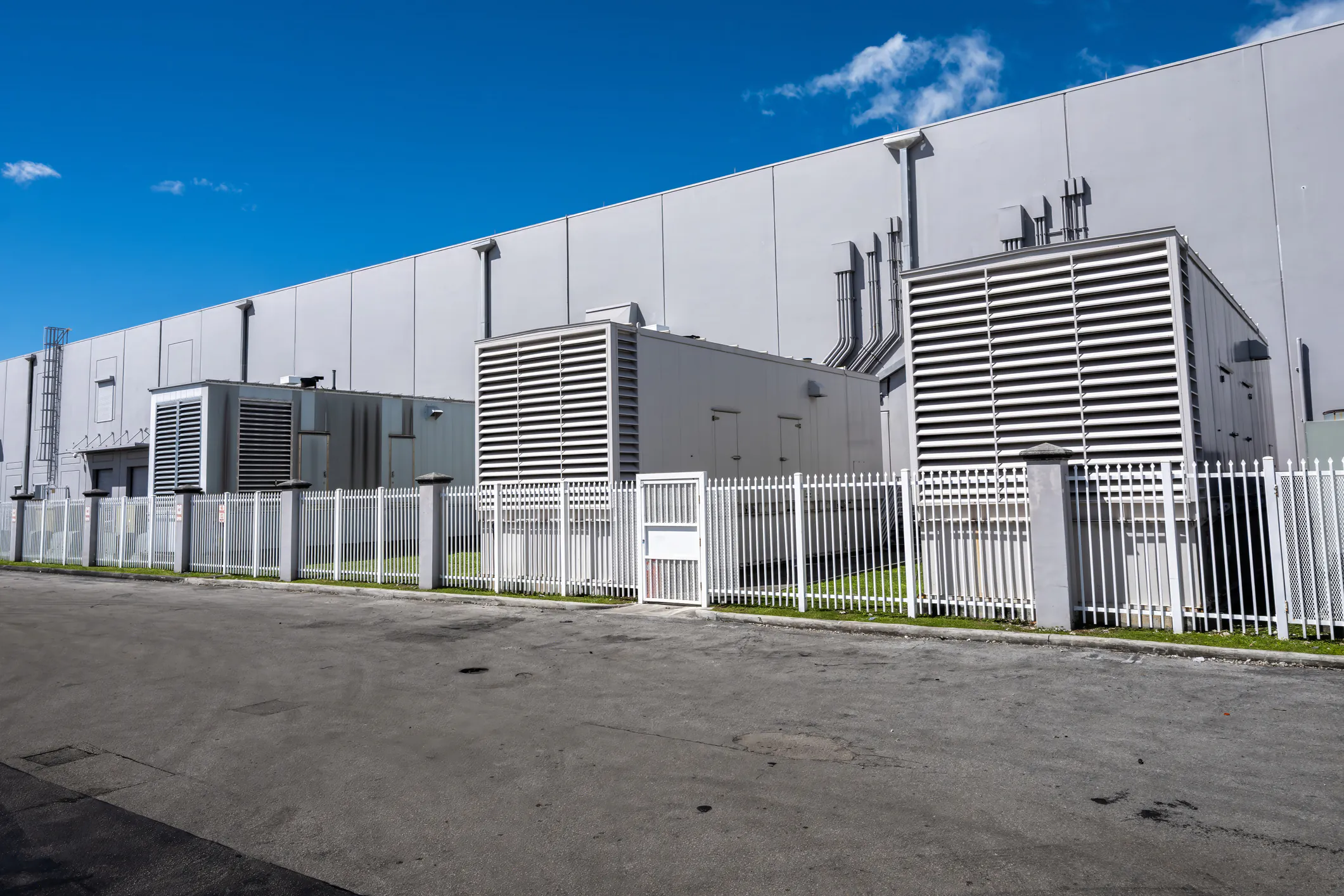
When the power grid fails, some operations can wait it out. Hospitals and emergency services cannot. For them, a backup generator is not a convenience. It is the line between staying online and a failure measured in lives. Emergency services like hospitals rely heavily on generator power, and they are far from alone. The recent surge in data center construction has widened the pool of facilities leaning on the same standby systems: U.S. data center electricity use has roughly tripled over the past decade and is projected to double or triple again by 2028, according to Lawrence Berkeley National Laboratory. Across hospitals, emergency services, and data centers alike, reliable on-site backup generation has become mission-critical.
That has turned a once-routine engineering decision into a live debate. Should backup generators burn diesel drawn from on-site storage, or natural gas delivered by a utility pipeline? Both are proven in mission-critical environments, and both carry real advantages.
For the operations that can least afford to go dark, a backup generator is more than an engineering line item. It is the last line of power security, the machine that stands between a hospital, a data center, or an emergency dispatch center and the cost of going offline when the grid fails. Which fuel it burns, and how dependably that fuel keeps coming, is ultimately a question about how secure that last line really is.
Booster delivers fuel to fleets, hospitals, and the emergency services that depend on standby power across the country, and doing that day in and day out surfaces the factor most fuel comparisons leave out: whichever option a site chooses, an on-site fuel strategy is only as reliable as the plan to keep it fueled and at the ready. That question runs underneath the comparison that follows, which weighs the two fuels on reliability, emissions, cost, footprint, and code compliance. Here is how the two compare:
| Factor | On-site diesel | Pipeline natural gas |
|---|---|---|
| Fuel supply | Stored on-site, independent of utility infrastructure | Drawn from a utility pipeline |
| Startup to full load | Under 10 seconds | Generally longer to accept full load |
| Runtime ceiling | Limited by on-site storage and refill, commonly 24 to 96 hours | Continuous while the pipeline holds |
| Emissions vs. Tier 4 | Higher CO and NOx unless aftertreatment is added | Generally lower CO and NOx; PM and VOC can be similar |
| Upfront cost | Lower | Higher, due to spark ignition and aftertreatment |
| Footprint | More power-dense, smaller | Larger for equivalent output |
| Primary vulnerability | Depends on fuel replenishment | Depends on pipeline integrity |
Is Diesel or Natural Gas More Reliable for Backup Power?
The defining difference between the two fuels is where the energy sits when an emergency hits. Diesel generators draw from fuel stored on-site, which means the energy is physically present and available regardless of what happens to the surrounding utility network. Because diesel carries more energy per gallon than natural gas, a facility can store enough to run for up to 96 hours with no outside connection at all.
Natural gas generators draw fuel from a utility pipeline. Under normal conditions, that pipeline is highly reliable and removes the need for on-site fuel storage entirely. But a pipeline is an external dependency, and during the widespread events that backup power exists to cover, such as earthquakes, hurricanes, and regional infrastructure failures, that supply can be interrupted at the worst possible moment. For facilities engineered around fault tolerance, that single point of failure is often the deciding factor.
It is a simple calculation, and the one Booster plans around every time it fuels a standby system: The gallons already in the tank are the only ones guaranteed to be there when the grid goes down.
How Fast Do Diesel Generators Start?
When utility power drops, the switch to backup has to happen fast. But fast can mean two different things. The first is simply starting the engine. The second, and the harder one, is picking up the load. Here, picking up the load means taking on the full electrical demand of the facility at once. In a hospital that can mean operating rooms, life-support equipment, and refrigerated medications; in a data center, the servers, storage, and cooling systems. A backup generator does not get to ease into the job. The moment it takes over, it has to carry all of it.
This is where diesel has an edge. Diesel generators typically reach full load in under 10 seconds, absorbing the entire demand in a single step without stumbling. Natural gas units have narrowed the gap with modern controls, but they generally prefer to take on demand more gradually and can struggle when the full load lands in one jump. The difference is a little like the contrast between an engine that can tow a fully loaded trailer from a standing start and one that would rather build up to speed first.
Whether that difference matters depends on the facility. Many hospitals and data centers run an uninterruptible power supply, or UPS: banks of batteries that instantly carry the load for the first seconds or minutes of an outage. That buffer covers the gap while a generator comes up to speed, so a slightly slower start goes unnoticed by the equipment. But where the battery buffer is thin, or where code or a customer uptime guarantee caps how long the transfer can take, raw start speed becomes decisive.
Are Natural Gas Generators Cleaner Than Diesel?
This is where natural gas can hold a measurable edge. Under EPA emissions standards, a Tier 4 Final diesel generator already cuts nitrogen oxides by roughly 88% and particulate matter by roughly 85% compared with an older Tier 2 unit. On the other hand, natural gas generators generally emit even less carbon monoxide and NOx than a Tier 4 diesel, though their particulate and volatile organic compound emissions can be comparable depending on the model and configuration. Diesel can meet strict standards, but it takes aftertreatment systems like selective catalytic reduction and diesel particulate filters to get there.
Regulatory pressure is pushing in the same direction, and California is furthest ahead. New installations in the state’s major air districts effectively require Tier 4 Final generators with full aftertreatment under CARB’s Airborne Toxic Control Measure for stationary diesel engines. Other major data center markets are following: Virginia has a proposed Tier 4 requirement for new data center air permits, and Oregon and Washington are moving toward the same standard. Operators planning diesel backup should expect the emissions bar to keep rising.
Which Is Cheaper, Diesel or Natural Gas Generators?
Diesel is usually the more economical choice. Diesel generator packages are simpler and less expensive than comparable natural gas units, which carry the added cost of spark-ignition hardware and exhaust aftertreatment. Diesel’s higher energy density also makes it more power-dense, so a diesel installation occupies less space for the same output. In a facility where every square foot could otherwise hold revenue-generating equipment, that compactness has real value. Natural gas can offset part of this over the life of the system through more stable fuel pricing and a lower fuel cost per unit of energy.
The generator itself, though, is a one-time purchase. The cost that recurs, month after month, is the fuel and the logistics of getting it on-site, which is where the long-run economics of a backup system are actually decided.
Does NFPA 110 Require On-Site Fuel Storage?
For many facilities, the fuel decision is not purely an engineering preference. It is shaped by code. NFPA 110, the standard that governs emergency and standby power systems, permits natural gas as an energy source. But it does not treat a pipeline as automatically sufficient.
Its strictest requirements fall on the most critical (Level 1) systems, the settings where a power failure could cost lives: hospital life-support equipment, fire pumps, and the dispatch systems behind emergency services. There, NFPA 110 requires on-site fuel storage for the full rated duration wherever the offsite supply has a high probability of interruption. Data centers usually sit one step below that, at Level 2, and the local authority having jurisdiction decides how the rules apply, though because downtime is not an option, many data center operators build to the stricter standard anyway.
The tolerances are brutal. The Uptime Institute, whose rating system is the most widely used benchmark for data center reliability, allows even a basic Tier I facility only about 28 hours of downtime a year, and a top-rank Tier IV facility just 26 minutes. Meeting such strict standards is likely why both the Uptime Institute and NFPA 110 call for a minimum of 12 hours of fuel stored on-site, rather than counting on a pipeline.
In the exact high-risk conditions that make backup power necessary, code often points back toward stored, on-site fuel. That is the reliability logic that has kept diesel the default for critical backup even as cleaner alternatives arrive.
Will Natural Gas Replace Diesel Backup Generators?
Natural gas is gaining ground quickly, but largely for a different job. As grid interconnection stretches to several years in many regions, developers are increasingly turning to on-site natural gas to run data centers as their primary power source, not merely to back them up. Large gas projects are advancing on this basis, including a Utah campus that could eventually reach 4 gigawatts running on Caterpillar natural gas generators for prime power.
So, natural gas is winning new prime-power and bridging deployments, where continuous pipeline supply and a cleaner emissions profile are decisive advantages. But for the life-safety backup that hospitals and emergency services depend on, the seconds-matter scenario in which the pipeline itself may be compromised, diesel’s on-site independence still leads. Increasingly, the two fuels are answering two different questions.
Can Renewable Diesel Run in Existing Generators?
There is also a way for diesel to close much of its emissions disadvantage without surrendering its reliability advantage. Renewable diesel is a drop-in fuel that meets the same ASTM D975 specification as petroleum diesel, runs in the same generators, and stores in the same tanks, with no equipment changes required. Because it burns cleaner, it can reduce carbon intensity by roughly 65% compared with conventional diesel under California’s Low Carbon Fuel Standard accounting. For an operator that has chosen on-site fuel for reliability reasons, renewable diesel offers a route to substantially lower emissions while keeping the pipeline independence that made diesel the choice in the first place.
How Long Can a Backup Generator Run Without Refueling?
Whichever way a facility leans, one factor underpins every on-site fuel strategy and rarely appears on a spec sheet: refueling. The 96-hour and 12-hour fuel minimums that have been built into NFPA 110 and the Uptime tiers both assume the backup fuel can reliably be refilled. During a prolonged regional emergency like a natural disaster, that replenishment is only as reliable as the fuel partner behind it. On-site storage guarantees the first hours. A responsive fuel delivery operation guarantees every hour after that.
What Does It Take to Keep Backup Generators Fueled?
Generators are awkward assets to keep fueled. They are often permanent installations or large, hard-to-reach units that follow no predictable cadence. A hospital’s backup generator might sit ready for months, then run for days during a prolonged outage, while other critical assets, from emergency-services sites to construction and temporary power, need refills on schedules that shift week to week. Running several at once, across different locations, capacities, and usage patterns, becomes an administrative burden with nothing to do with the work that actually matters. This is the part Booster is built to take off a customer’s plate. Booster already fuels backup generators for hospitals and emergency services, building each program around the site’s needs, whether that means scheduled preventative fills, emergency response after an outage, remote-monitoring triggers that call for fuel automatically, or on-demand deliveries.
That capability is not theoretical. The same program that keeps a hospital or an emergency-services generator fueled extends naturally to data centers, telecom hubs, and any other operation running on standby power, all of which depend on the same quiet guarantee: when the grid drops, the fuel is already there, and it keeps coming. Booster’s value is not only delivering that fuel. It is removing the operational burden of managing it across fleets, generators, and other critical assets, so customers can keep their attention on their mission while their power security holds.
Booster delivers diesel and renewable diesel directly to the facilities that depend on them, with emergency delivery designed to keep generators running through exactly the extended outages that stored fuel is meant to cover. If your hospital, campus, or operation runs on on-site backup power, the resilience of that system depends on the fuel behind it. Reach out to the Booster team to build a diesel and renewable diesel fueling program around your generators, your fleet, and the critical assets in between.