
Finding enough truck drivers is back among the trucking industry’s top concerns for 2026, ranking No. 5 in the American Transportation Research Institute’s annual Top Industry Issues survey, and keeping them is back at No. 10. Fuel prices ranked even higher, rising from 18th place last year to No. 1 as diesel climbed past $6.50 a gallon. For fleets, the two problems meet at the pump, where drivers who are already hard to find hours each year buying expensive fuel. Booster has been adding drivers of its own as it opens new yards in Van Nuys and Fontana, with 37 hired since May 2026. Here’s a look at what’s changed and how fleets and Booster are responding.
What Pushed Fuel Prices to No. 1 in ATRI’s 2026 Survey?
ATRI released the results of its 22nd annual survey on October 18 at the American Trucking Associations’ Management Conference & Exhibition in North Carolina. Nearly 3,100 industry stakeholders took part, including fleet executives, truck drivers, suppliers, driver trainers, and law enforcement.
Thirty percent of respondents ranked fuel prices among their top three concerns, making this the fourth time fuel has led the list, after 2005, 2008, and 2022. ATRI fielded the survey from Aug. 24 through Oct. 2, while diesel was hitting its 2026 high of $6.529 a gallon, according to the U.S. Energy Information Administration. The national average has eased only slightly since, to $6.276 as of October 19.
ATRI’s report also notes that fuel surcharges don’t fully protect carriers. Some freight isn’t covered by a surcharge at all, spot-market rates lag behind sudden price jumps, and empty miles between loads burn fuel no shipper is paying for. Those gaps come on top of record non-fuel costs, which reached $1.854 per mile in 2025, up 4.2% from the year before.
Truck drivers put fuel prices first, too, as did owner-operators and independent contractors. The economy, which had led the survey for three years, fell to sixth, a sign of cautious optimism about the freight market. That improving market is also what brought driver concerns back onto the list.
Why Is the Driver Shortage Back in the Top 10?
Both driver issues returned after dropping off last year’s list entirely. Among fleet executives and staff, the driver shortage ranked third, behind only lawsuit abuse reform and fuel prices.
During the recent freight downturn, fleets parked trucks and reduced headcount. Carriers that participated in ATRI’s operating cost research cut their driver workforce by an average of 6.4% in 2025, and as freight picks up, recruiting is back on the agenda. ATRI is careful not to overstate the turnaround, though. Its report notes that the recovery has come more from shrinking capacity than from stronger demand, so better rates don’t necessarily mean much more freight to haul.
Drivers also see the job differently than fleets do. Company drivers, counted separately from owner-operators, ranked compensation as their No. 1 concern, even though it fell from fifth to ninth overall. Truck parking showed a similar gap: it dropped to 11th in the overall rankings, its first time outside the top 10 since 2012, but remained drivers’ second-biggest concern.
Rebuilding a driver roster also takes time. Since February 2022, federal rules have required new drivers to complete Entry-Level Driver Training from a registered provider before they can take the CDL skills test.
Where Is Booster Finding the Next Generation of Drivers?
Since May 2026, Booster has hired 51 employees: 37 drivers and 14 corporate staff. Booster has held at least five driver hiring events in the past six weeks, and much of the hiring has been for its two newest yards, Van Nuys and Fontana.
Booster has also added staff in Orange County and Los Angeles, Santa Clara County, Sacramento County, and Yolo County through community hiring programs and CDL school partnerships. In Orange County and Los Angeles, a partnership with TGA Trucking School sends Booster drivers who already hold the credentials the job requires. Fuel haulers need a HazMat endorsement on top of a commercial driver’s license, which adds a separate knowledge test and a TSA security threat assessment, so arriving fully credentialed gets a new driver on the road sooner.
Booster hires drivers who are still earning their licenses and pays them while they train. It’s a long-standing approach with on-the-job training paths that lead to full-time driving roles.
Community programs add another path into the company. Through Santa Clara County’s Employment Connection Program, Booster has hired 10 people into roles that range from Service Professional to Customer Success Manager. In September, the county named Booster its CalWORKs Achievement Awards Employer of the Year. Booster’s hires don’t stop at the first role, either. Two recent Sales Development Representatives have since been promoted into Account Executive and Customer Success Specialist positions.
As Booster expands into new markets, the plan is to keep building teams the same way: hiring locally, partnering with schools and community programs, and training people into long-term careers. Drivers and job seekers should keep an eye out for local events like the open call for drivers in San Jose this weekend, and can browse current open positions on Booster’s career page.
How Can Fleets Make Fueling Easier on Drivers?
The two biggest stories in this year’s rankings point at the same place. Fuel costs more, and drivers are harder to find, so every hour a fleet’s drivers spend off-route counts for more. Fueling is one of the most routine of those hours: a detour to the station, a wait at the pump, and a fuel card transaction, repeated across every vehicle, several times a week.
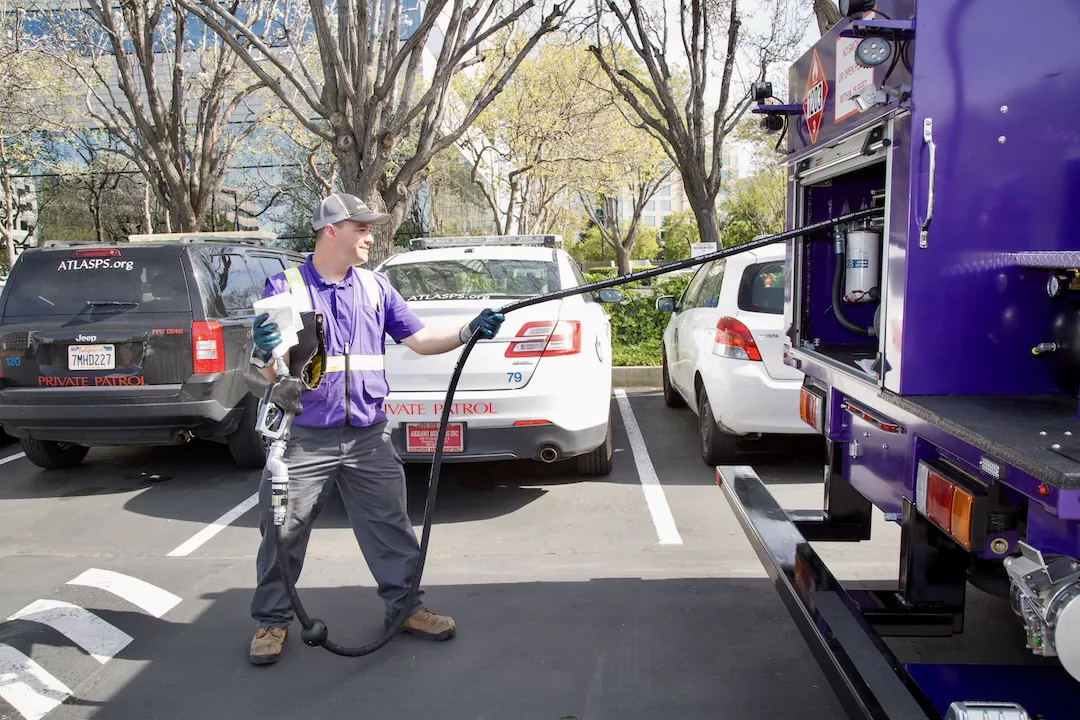
Mobile fuel delivery moves that task out of the driver’s shift and into the fleet yard, typically overnight or during off-hours. For fleets competing to hire and keep good drivers, taking a chore off the workday is one concrete thing they can offer. It also helps with the fuel side of ATRI’s list.
For Drivers
- Full tanks at shift start: Mobile fuel delivery services vehicles on site at lots, yards, and garages on a regular schedule, so drivers start their routes ready to go.
- Hours back on the route: Geotab research puts the average refueling trip at about 20 minutes, which adds up to roughly 61 hours per vehicle a year.
- No more pump-side card trouble: Booster accepts WEX, Voyager, Comdata, and AtoB, so drivers don’t have to deal with PINs or card declines at the pump.
For Fleets
- Clear, predictable pricing: Booster’s fuel follows a market index and its service fees are fixed, so the only number that moves is the fuel price itself. Contracted supply across multiple terminals keeps deliveries coming when markets swing.
- Spend tracked by vehicle: The Fleet Portal shows gallons and spend by vehicle, location, and period, so fuel costs are visible down to each truck.
- Fewer chances for misuse: Because every gallon is metered into a specific vehicle, Booster clients report misuse rates of 0.3% to 0.5%.
Fuel has now topped ATRI’s list four times in about two decades, and the driver shortage stayed off the list for just one year before coming back. Fleets can’t control the diesel market or the size of the driver pool, but they can control how much of a driver’s shift goes to fueling. Booster can help with that, starting with the first delivery. To see how many driver hours on-site fueling could save your team, reach out to a member of the Booster team for a complimentary fuel analysis.