
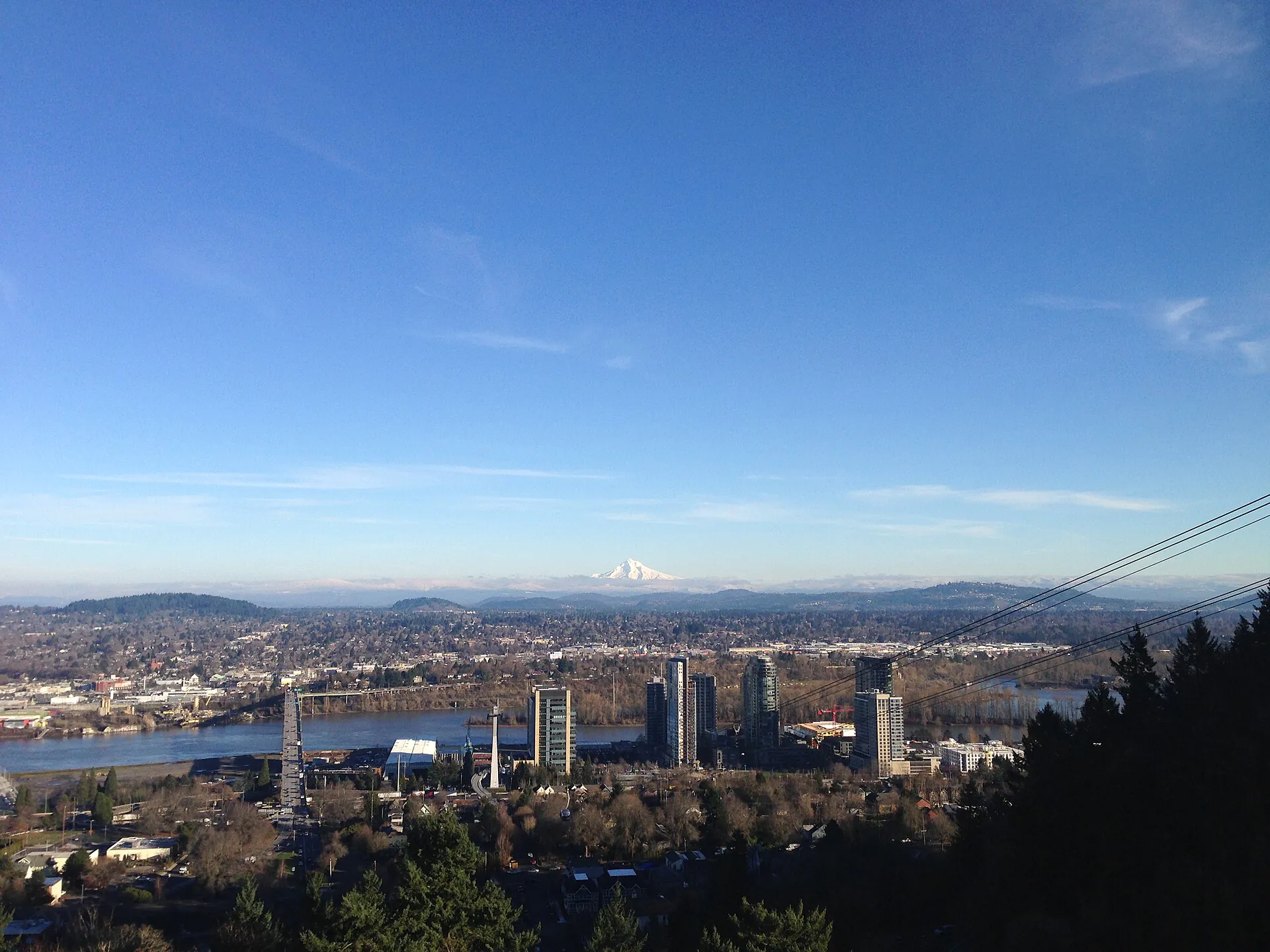
A year ago this May, Booster launched mobile fuel delivery in Portland, Oregon. The Pacific Northwest came with its own set of expectations: independent businesses that take their time choosing partners, a regional culture built around environmental leadership, and a customer base that pays close attention to who is actually behind a service. It was a market we were excited to earn our way into.
Twelve months in, the answer has been clear. A growing number of Pacific Northwest fleets, from landscapers and arborists like Blessing Landscape to logistics operators and delivery service partners with Amazon, have chosen Booster to fuel their work. Among them is one of Oregon’s most established landscaping companies: DeSantis Landscapes, a fifty-year-old, family-owned business with deep roots in the region, a Salmon-Safe certification, and a long-standing reputation among Oregon’s pioneers in sustainable landscaping. Their decision to bring Booster in on twice-weekly fuel delivery for both of their yards is one of the validations that has marked our first year in the Pacific Northwest.
A Region That Pays Attention
The Pacific Northwest is a place where small details matter. Independent and family-run businesses dominate the local economy. Environmental policy is not a marketing theme but a baseline expectation, written into how customers, employees, and city governments evaluate their partner companies. In a region of Doug firs, salmon runs, and a customer base attuned to environmental practice, fleet operators ask harder questions than most: who supplies the fuel, where do deliveries come from, and what shows up on the invoice versus what does not.
For a landscaping fleet like DeSantis, mornings include loading trucks with equipment and the plants and necessary support to service their customers. Until now, it has often included checking fuel gauges and detouring to local gas stations for top-offs or fuel can refills before getting on the road to actual customers. In a region where lawns barely stop growing and gardens never fully sleep, the work runs close to year-round, with mild, wet winters keeping crews and trucks busy through months when fleets in colder climates are parked. That year-round cadence – combined with the Pacific Northwest’s notoriously congested driving (Portland ranks as the 25th most congested metro in the country, according to INRIX’s 2025 Global Traffic Scorecard, with the average driver losing 41 hours a year to traffic) – is exactly the kind of operational reality where mobile fuel delivery earns its keep.
It is also the kind of operational reality where a fleet pays attention to what its fuel provider stands for in service and ethos. Booster’s commitment to clean delivery, transparent pricing, and on-site safety has resonated.
What That Looks Like at DeSantis Landscapes
When the DeSantis team came to Booster, leadership had three concerns: persistent fuel card theft, the environmental impact of decentralized fueling, and the cost of crew labor burned at gas station pumps. Most of the company’s vehicles carry two to four crew members at a time, which means every refueling stop pulls more than just a driver off the job. Every minute spent inching toward a fuel stop is multiplied by everyone in the cab.
Booster now services two DeSantis yards twice a week, fueling roughly 25 of the company’s vehicles directly on site. Across both lots, that adds up to approximately 280 gallons per visit and around 2,400 gallons per month – fuel delivered while trucks are parked, before the next workday begins.
Now, crews never detour to a gas station. Trucks start each morning with full tanks. The team’s fleet manager has a single, consolidated source of fuel data inside Booster’s customer dashboard instead of a stack of fuel card receipts to reconcile. And because the fuel transaction never passes through a driver’s hands, the most common avenue for fuel card misuse is closed off entirely.
A Pacific Northwest Roster That Keeps Growing
DeSantis Landscapes joins a regional client list that has expanded steadily through Booster’s first year in the Pacific Northwest. In the Portland metro, Blessing Landscapes trusts Booster with mixed-fleet fueling for its design and maintenance crews. Javelin Logistics relies on Booster to keep its diesel fleet moving across two locations, day and night. Amazon DSPs in the area count on us for the just-in-time gasoline that keeps last-mile deliveries on schedule. And just to the north in Washington, Eco Landscaping in Tacoma and East Side Tree Works in the Seattle area lean on Booster to streamline labor hours and reduce the carbon footprint of their service delivery.
Each of these companies came to Booster for slightly different reasons, but the underlying pattern is consistent: Pacific Northwest fleets are choosing a fuel provider whose values – on-site, low-emission, transparent, and locally rooted – match the way they already operate.
Built to Stay
A year in, Booster’s commitment to the Pacific Northwest is more than a marketing posture. We have been hiring local CDL-licensed drivers. Our signature purple Smart Tankers have become an increasingly familiar sight on metro streets. And we continue to add capacity, expand fuel options, including renewable diesel and biodiesel blends, and refine the systems that make Booster’s service work for the region’s particular rhythm.
If your fleet is operating in the Pacific Northwest and is curious whether mobile fuel delivery makes sense for the way you work, reach out to a member of our team today for a complimentary fuel analysis.