
Fleet managers across the country are under pressure to stabilize their fuel spends and plan around a volatile global market, ideally without investing in new trucks or causing upheaval to their existing fueling infrastructure.
At Booster, we are champions of mobile fuel delivery and all the ways it can lower the true cost of fueling for any fleet. But mobile fueling is just one way to save. In light of recent geopolitical complications, renewable diesel is another that deserves consideration. Unlike most alternative fuels, renewable diesel isn’t really an “alternative” in the traditional sense: it meets the same ASTM D975 specification as petroleum diesel, burns in the same engines, and can be dispensed from the same tanks and equipment your fleet uses today.
Our partnerships mean that Booster customers can count on reliable renewable diesel delivery when the economics in 2026 are increasingly hard to ignore.
Domestic Renewable Diesel Is Reliable When Geopolitics Affect Diesel Pricing
Global oil prices respond almost instantly to events thousands of miles away. A shipping route disruption, a sudden shift in production targets, or rising tension in a major oil-producing region can move per-gallon costs within hours, and fleet budgets feel it at the next delivery. Renewable diesel doesn’t carry the same exposure. It’s an American-made fuel: more than 20 renewable diesel plants now operate across the United States with roughly 5.1 billion gallons of annual production capacity – from Phillips 66’s Rodeo refinery in California to Montana Renewables in Great Falls, REG-Geismer in Louisiana, and Love’s new Heartwell plant in Nebraska.
A federal tax credit change in January 2025 made imported fuel ineligible for subsidies that only domestic producers now receive, and the shift was immediate. U.S. renewable diesel imports fell from 33,000 barrels per day in the first half of 2024 to just 5,000 in the first half of 2025, according to the U.S. Energy Information Administration. For fleets that depend on stable fuel costs, that domestic supply chain is a real protection from global volatility. When American fleets fuel up with renewable diesel, they’re backing American refineries, American workers, and a domestic production base that’s insulated from the shocks moving international markets.
Renewable Diesel vs. Traditional Diesel Pricing
According to the most recent Clean Cities & Communities Alternative Fuel Price Report from the U.S. Department of Energy:
- The average retail price of renewable diesel in California was $5.05/gallon.
- The average retail price of petroleum diesel in California was $5.08/gallon.
- National average B20 biodiesel was $3.74/gallon — identical to the national diesel average.
- National average gasoline for the same period was $3.14/gallon.
In other words, in California, renewable diesel is currently a few cents cheaper than conventional diesel, and B20 biodiesel is holding even with diesel nationwide. The directional signal is clear: renewable diesel and biodiesel blends are no longer “premium” fuels in the markets where they’re widely available.
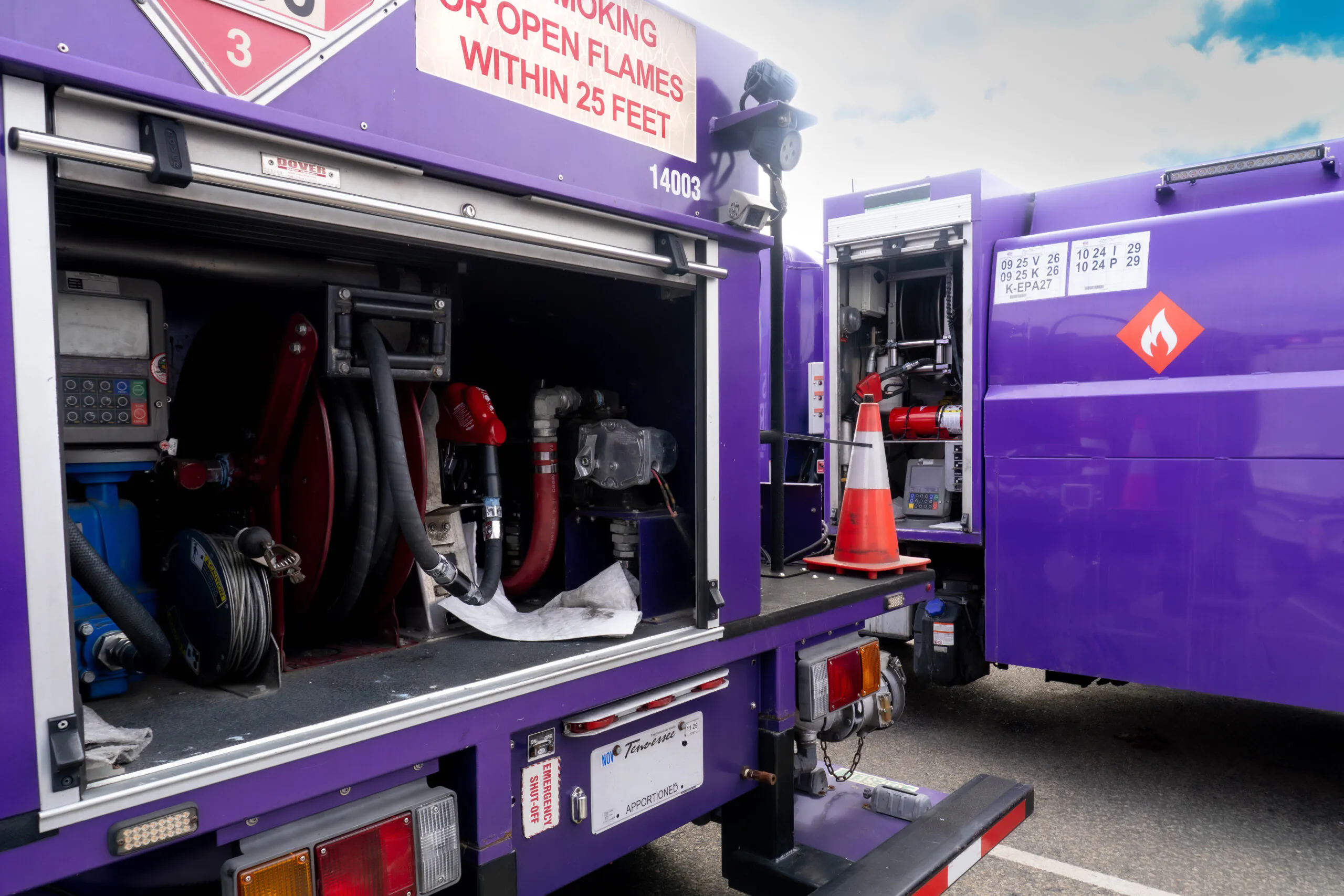
Booster’s partnerships with Chevron’s Renewable Energy Group and others mean we can offer reliable renewable and biodiesel options for our customers. In California, our customers are already benefiting from this option. Renewable diesel has become our most popular fuel type in the last few months as savvy fleet managers understand the opportunity to save without forcing equipment or infrastructure changes. Booster’s technology and cross-fleet real time awareness helps customers switch to a lower cost option when the price is more affordable than traditional diesel.
The drop-in nature of both renewable diesel and the right biodiesel blends is groundbreaking for fleet managers who don’t have the budgets to upgrade their equipment every time prices fluctuate. It’s important to understand the differences between renewable diesel and biodiesel blends to ensure equipment stays operational.
Renewable Diesel and Biodiesel Are Not The Same
The short answer for fleet managers: One can be used in place of diesel without concern, while the other must be blended to avoid equipment damage. Now, a slightly longer answer on fuel makeup.
Renewable diesel – sometimes labeled R99 or R100 – is produced by hydrotreating fats, oils, and greases into a hydrocarbon fuel chemically similar to petroleum diesel. That similarity matters because it means that this fuel can be blended with conventional diesel in any ratio, or replace it outright, without engine modifications, fuel system upgrades, or warranty concerns. Major equipment manufacturers including Cummins, Caterpillar, Detroit Diesel, and Volvo have approved R100 for use in their diesel engines, and it can be stored and dispensed through existing diesel infrastructure.
Biodiesel, on the other hand, is chemically different enough from diesel that it cannot be “dropped in” like renewable diesel. Biodiesel is a fatty acid methyl ester that acts as a solvent on rubber fuel lines, which can cause damage. Biodiesel also gels at higher temperatures than petroleum diesel which decreases its one-to-one interchangeability as equipment would need to adapt to this temperature change nuance. As a result biodiesel is most commonly delivered in blends like B5 or B20 and should not be considered a drop-in replacement automatically. When blended with traditional diesel (typically up to B20—20% biodiesel, 80% petroleum diesel), it can be used without equipment changes, but any higher blends might require changes fleet managers may not be ready to make.
Renewable Diesel Allows For Flexibility Without Equipment Change
Renewable diesel adds a lever to every fleet manager’s fuel strategy without adding complexity. You can depend on renewable diesel today, switch back to conventional diesel tomorrow, and blend the two all without changing a truck or a tank. Paired with Booster’s Smart Tanker delivery, which can carry multiple fuel types in a single trip, adding renewable fuel to your rotation doesn’t change your delivery schedule but it does keep your invoice affordable. And your fleet’s performance should not be affected by the change.
When drivers switch to renewable diesel, they generally don’t notice a difference. Renewable diesel has a cetane number between 75 and 90, compared to roughly 40 to 45 for conventional diesel, which supports cleaner combustion and can reduce wear on diesel particulate filter systems. Its energy content is about 4% lower by volume, a small trade-off that’s typically offset by its higher cetane number and cleaner burn. In other words, where performance is slightly off, it’s made up for in other ways that drivers won’t even notice.
As the fuel market continues to move, the fleets with the most options will be the ones best positioned to absorb price shocks. If you’re curious whether renewable diesel or biodiesel blends make sense for your fleet’s mix and geography, contact our team for a complimentary fuel analysis.